
Opelika Previous Resident Sources
Every Opelika address crosses several record eras. Start with the Opelika source closest to the target date, then join it to the next Opelika dated item. The Opelika era table distinguishes title, household, building, and life-event evidence. That distinction matters: an Opelika deed names transfer parties, an Opelika directory may name a householder, and an Opelika Sanborn sheet describes a structure without naming anyone.
| Source | Years it covers | Where held | What it shows |
|---|---|---|---|
| Electronic Opelika deed index | July 1, 1986 to present | Lee Probate courthouse terminals | Parties and recording placement |
| Electronic Opelika deed images | June 1, 1997 to present | Lee Probate courthouse terminals | The recorded instrument image |
| Handwritten Opelika indexes and books | Before July 1, 1986, toward county formation | Probate Records Vault | Earlier title links; first surviving book is unverified |
| Opelika CAMA and GIS | Current assessment cycle | Lee Revenue / Flagship | Owner, situs, mail, parcel, deed and plat leads |
| Opelika Polk address guide | 1923 | Internet Archive | Address linked to a dated householder |
| Opelika ADAH directories | Intermittent 1960 to 1992 | Alabama Archives | Opelika and later Opelika-Auburn snapshots |
| Federal census for Opelika | Decennial schedules through 1950 public | Library and genealogy databases | Household members and relationships |
| Opelika Sanborn maps | Seven editions, 1885 to 1909 | University of Alabama map inventory | Street, structure, material, use, and outbuildings |
| Opelika permits and aerials | Online permit start unstated; aerials dated | Opelika / Lee GIS | Work, inspection, completion, and physical change |
An Opelika source ledger should record date, source, Opelika address as printed, person or party, role, legal identifier, and confidence. This format shows where the Opelika trail is firm and where the previous-resident claim still needs support.
Trace Opelika Resident Deeds
The current Opelika CAMA property card supplies the assessed owner, PPIN, situs and mailing addresses, deed book and page, recording date, subdivision, plat, and other legal clues. Those fields start the chain of title, which is the sequence of recorded transfers for the same Opelika land. Lee County does not offer a verified public Opelika web deed index. The working index is on courthouse terminals in Opelika at the Judge of Probate Records Vault, 215 S. 9th St.
- Save the current Opelika parcel key, owner, deed reference, plat, lot and block, acreage, and full legal description from CAMA.
- At Probate, find the Opelika assessed owner's acquisition deed as grantee. Verify that its legal description matches the Opelika parcel.
- Copy the Opelika grantor, co-owner or spouse, recording date, prior-deed recital, and every stable land identifier from the instrument.
- Search that seller as a grantee to locate the prior Opelika purchase. Repeat while the same legal land continues.
- Before the electronic cutoff, move to handwritten grantor and grantee cards and bound books. Check a computer historical hint against the handwriting.
- Grantor
- The party transferring an interest in Opelika land.
- Grantee
- The party receiving that Opelika interest. A backward search often finds each seller's earlier deed under this role.
- Chain of title
- The linked run of transfers for the same Opelika property.
- Legal description
- Lot, block, subdivision, plat, section-township-range, acreage, or boundary language that identifies Opelika land more reliably than a street label.
Common Opelika names require more than a grantor or grantee hit. Match the spouse or co-owner, acreage, lot and block, adjoining calls, and prior-deed recital before adding that transfer to the Opelika chronology.
Opelika Resident Deed Eras
The split between indexing and images creates a key Opelika previous-residents trap. An Opelika deed recorded after July 1, 1986 may be in the electronic index, yet an Opelika instrument recorded before June 1, 1997 may still require physical retrieval. Older Opelika title work depends on handwritten cards and books. Probate staff can help an in-person Opelika visitor by name. A mail request is far more effective after CAMA or the terminal supplies the book, page, and recording date.
The Alabama Archives County Records search is a separate route for locating Opelika county microfilm series and historical material.
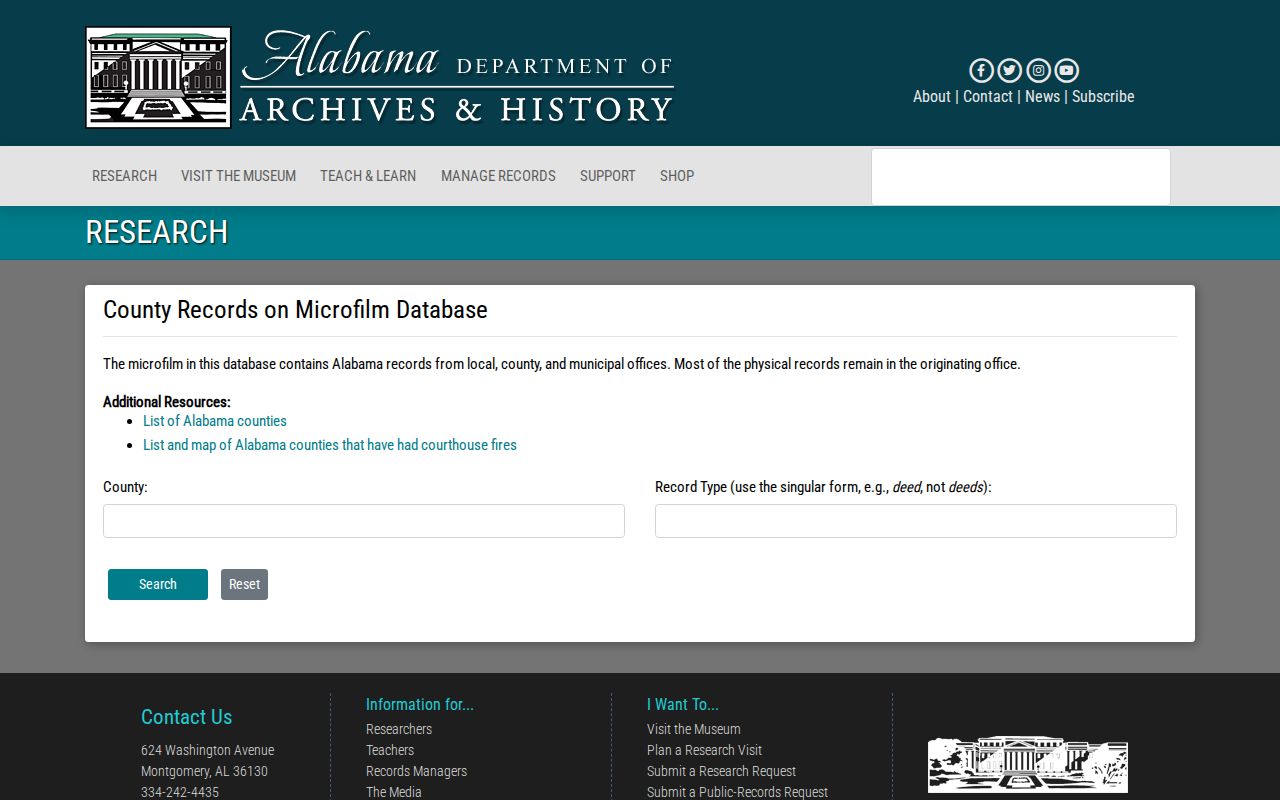
Original Opelika county records generally remain with their originating offices, and the exact Lee County microfilm series was not captured in the research. Call Probate at 334-737-3670 before a long Opelika visit. The reported 1:00 to 2:30 p.m. window can be busy.
Note: The first surviving Lee deed book for Opelika was not verified, so do not turn the county's 1866 creation date into a promised start year.
Match Opelika Resident Snapshots
Title answers who held a recorded interest. Previous residents need household evidence too. The 1923 Polk volume reverses an Opelika address through its Street and Avenue Guide, then the alphabetical section can add initials, spouse notation, occupation, business, or residence marks. Later Alabama Archives holdings are intermittent, so a missing year is a source gap rather than proof that the household left.
Pair each Opelika address entry with the nearest public federal census and other dated sources:
- Copy the directory line exactly, including initials, spouse, occupation, abbreviation, street number, and page image reference.
- Check the address-first section for adjacent numbers and intersections. Keep Opelika separate from Auburn and Lafayette entries in the combined 1923 book.
- Use the 1920 or 1930 census around the 1923 snapshot. In 2026, the 1950 population census is the latest one open under the 72-year rule.
- Add deed, probate, obituary, church, permit, or yearbook evidence. Label whether each source identifies an owner, householder, relative, customer, or building.
The verified Opelika volume list and reading methods belong to the Opelika Directory Book. For a one-address chronology, only the relevant Opelika dated entries should be carried forward.
Map Earlier Opelika Resident Sites
The University of Alabama Opelika Sanborn inventory lists editions for 1885, 1888, 1893, 1898, February and July 1903, and 1909. Coverage grew from three sheets in the first edition to thirteen in the last. Choose the map nearest the target date, locate the street and block, then record the number, footprint, building material, use, and outbuildings.
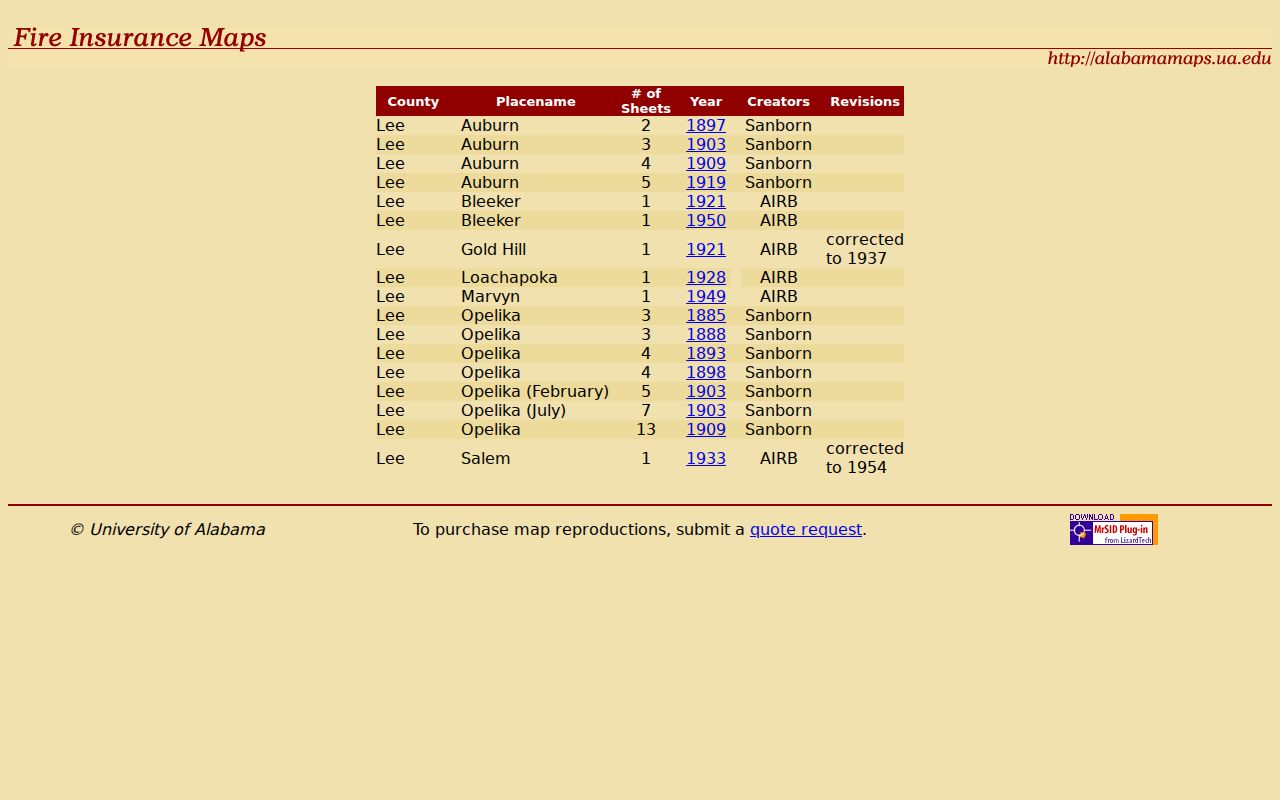
Sanborn maps do not name Opelika past residents or prove ownership. They can show that a site was vacant, that a structure changed form, or that the street numbering differs from a later source. Since the available maps end before the 1923 directory, their value is structural continuity. Pair them with deeds, directories, or census records before attaching a person to the place.
Date Opelika Resident Addresses
The Opelika Business Portal provides Inspection and Today's Inspections searches. Inspection includes Advanced address and date criteria. A linked inspection number and checklist comments may reveal the permit request, plan review, utility approvals, inspection outcomes, red or green tags, final inspection, and certificate of occupancy. These files can name an owner, applicant, developer, contractor, or other responsible party, but not every previous resident.
County GIS aerials from 2020 and 2024, plus city map documentation from 2017, add visible change across Opelika. Use permits and aerials to date a structure or alteration, then compare that date with the title and household ledger. If the public portal cannot supply the needed record, Building Inspection at 334-705-5420 and the City Clerk's NextRequest channel are the documented fallbacks. Ask for one address, a defined record set, and a date span.
Close Opelika Resident Trails
An obituary or estate file can explain why an Opelika past resident disappears from an Opelika address sequence. Opelika Public Library's HeritageHub provides obituary and death-notice images, while the city cemetery map covers Rosemere, Evergreen, and Garden Hills. Probate petitions, wills, estate notices, and post-estate deeds may identify heirs or succession. Each Opelika source should be read for its own claim. An obituary relationship is a clue; a court or deed record may state a legal role.
A modern Opelika vital certificate is not a public name index. The Alabama vital-record application requires event and applicant details, identification, and eligibility for restricted recent records.
Birth certificates are restricted for 125 years and death certificates for 25 years under Alabama law. For earlier Opelika events, church registers, cemetery records, newspapers, census, county marriage records, and probate are complementary sources. None should be mislabeled as a civil birth or death certificate.
Opelika Resident History Breaks
Lee County was created on December 5, 1866 from parts of Macon, Russell, Chambers, and Tallapoosa Counties. A property trail that reaches earlier than county formation may move into a parent-county index based on the land's old jurisdiction. Russell County is especially relevant for Opelika research. The 1868 fire destroyed much of the business district, but no verified source says it destroyed courthouse records. It should not be used to explain a missing deed.
Street labels can fail for other reasons. A parcel split may turn one old legal description into several current lots. A consolidation can do the reverse. Postal Opelika can extend beyond the incorporated city, especially in 36804. Lee Road searches need four-digit padding and Rd without a period. No citywide renumbering date was found. When an address does not match, return to plat, lot, block, acreage, adjoining calls, and section-township-range before assuming the record vanished.
Test Opelika Resident Clues
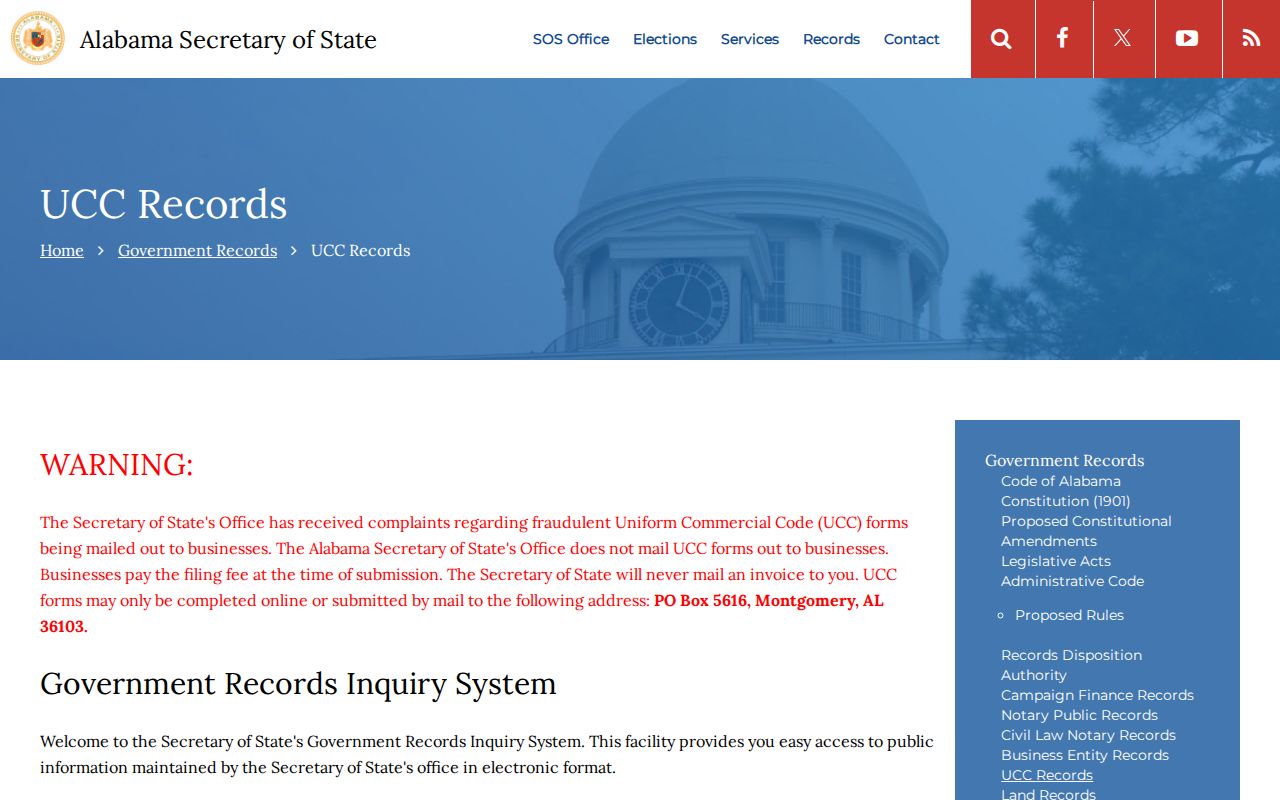
Some records can corroborate a name without proving residence. An Alabama UCC filing can identify a debtor in a secured transaction, and optional address or date limits can narrow too far. It is not an ownership roll for a house. The Secretary of State UCC records route shows the official search category.
Federal court records are just as secondary. PACER can search federal parties and dockets, while Lee property and probate records remain the primary address chain.
An Opelika party name or filing address may support a date when it matches independent facts. It cannot replace the parcel, deed, directory, or census proof. Preserve the Opelika case role and date, and never merge two people because they share a surname and city.
Use Opelika Previous Residents Lawfully
Opelika previous residents are best traced for family history, estate questions, preservation work, and personal curiosity about a building. Record only what supports the dated Opelika history. Leave living people's protected details out of any public chronology. An assessment owner is not a complete household, a permit applicant is not necessarily an occupant, and a directory entry does not prove uninterrupted residence between editions.
When two Opelika sources conflict, retain both and rank them. Recorded title controls the stated transfer, while a directory or census can support Opelika household presence. A terminal historical hit should be checked against the old handwritten index. A grave or obituary date may guide the search, but an eligible official certificate is the civil event record. Gaps should remain gaps.
Lawful use. Opelika house-history research must not become tracking or harassment. Use past-resident facts with care, verify them, and do not expose a living person's protected location.